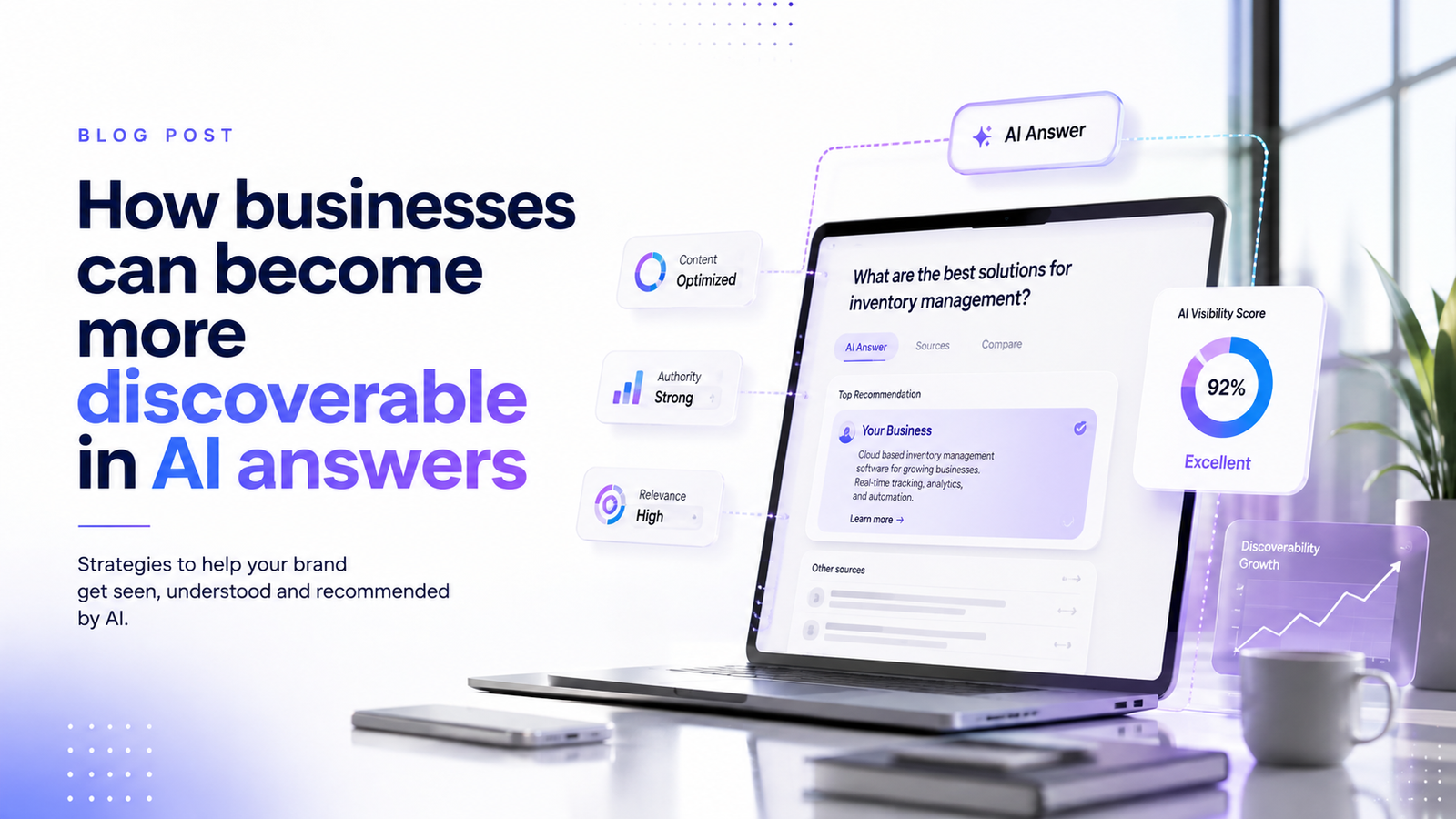
1. The Shift from Keywords to "Entities"
Traditional search engines acted like digital librarians, matching the keywords in a user's query to the keywords on a webpage. AI-driven search acts like an expert consultant. It understands context, intent, and relationships.
Instead of looking for keywords, AI looks for entities—distinct, well-defined concepts (a person, a business, a service, a location). If an AI does not recognize your business as an authoritative entity within your industry, you simply will not appear in its synthesized answers.
How AI Evaluates Your Business
Depth over Breadth: AI favors comprehensive, deep-dive content that answers the "why" and "how," rather than shallow articles stuffed with the "what."
Semantic Relevance: The AI assesses how your services connect to the broader industry.
Technical Credibility: Slow, poorly structured digital platforms are ignored by AI crawlers in favor of fast, structurally sound ecosystems.
Explore the exact differences in how traffic flows between traditional models and modern AI algorithms below:
2. Strategies for AI Discoverability
To ensure your business is cited as the definitive answer by AI engines, you must restructure how you present information online.
| Tactic | Traditional SEO | AI Search Optimization |
|---|---|---|
| Content Focus | Short blogs targeting high-volume keywords. | Long-form, expert-driven answers to complex, niche questions. |
| Site Structure | Flat, isolated pages. | Highly interlinked "Knowledge Hubs" mapping concepts together. |
| User Queries | "Best IT company" | "How does custom ERP integration reduce manufacturing bottlenecks?" |
The "Zero-Click" Reality
AI engines aim to answer the user's question directly on the search page. This means your goal is to be the cited source within that AI answer. To achieve this, your website must feature structured data (Schema markup) that explicitly tells the AI what your business does, who you serve, and where you are located.
3. The Infrastructure Required for AI Visibility
AI algorithms are ruthless when evaluating digital infrastructure. A brilliant marketing strategy will fail if the underlying technology is fragmented. Off-the-shelf SaaS products often create data silos that AI crawlers struggle to interpret. To truly stand out, a proprietary, unified digital ecosystem is required.
Website Development: Your corporate site must be engineered for speed and semantic structure. If an AI cannot crawl your site in milliseconds, it will move to a competitor.
Customized Software Development: Building proprietary tools and calculators on your domain increases dwell time and signals high utility to AI engines.
CRM & ERP Integration: Centralizing your data through custom CRM and ERP systems ensures that your business operations match the scale of your digital footprint, allowing you to handle the complex, high-value leads that AI search generates.
Digital Marketing: Modern marketing must focus on building topical authority through authoritative content distribution, rather than simple link-building.
Engineering Authority from the Ground Up
The business landscape in Rajkot and the broader global market is rapidly evolving. As enterprises expand their operations, relying on outdated search tactics is a critical vulnerability. AI does not guess; it analyzes architecture, authority, and infrastructure.
At LayerByt, we engineer the digital ecosystems required to dominate this new frontier. We do not rely on generic SaaS workarounds. From high-performance web development to bespoke software and enterprise-grade CRM/ERP solutions, we build the technological foundation that makes your brand the undisputed answer in your industry.
Delivering scalable software and IT solutions to accelerate digital transformation.
To ensure your business is ready for the AI-driven future, contact our engineering and digital strategy team to build your customized technical roadmap.